Tag Archives: Mark Carrigan

Book launch – Margaret Archer’s final book: Morphogenesis Answers Its Critics – March 28th 2024, online at 3pm GMT

The CSO announces an online launch event for the ultimate book of Prof. Margaret Archer.

Further information (incl. registration) on this webpage from the CRN.

Book description, featuring reviews from CSO members Doug Porpora and Emmanuel Lazega, on this webpage from the publisher CUP.

Picture: open book and sunset, generated by DALL.E on ChatGPT 4.0

One-Day Symposium on the Legacy of Margaret Archer – August 3rd 2024, University of Warwick, England, UK (event just after the IACR conference)

We are delighted to announce a one-day symposium co-organised by Dr. Mark Carrigan with the BSA Theory Group. The symposium will be dedicated to exploring and celebrating the legacy of Prof. Margaret Archer. The aim of the symposium is to engage with and critically assess Archer’s contributions to social theory, her influences and engagements outside critical realism, the global reception of her work, and her place within the larger tradition of critical realism.
Further information, including the call for papers, may be accessed here and here.

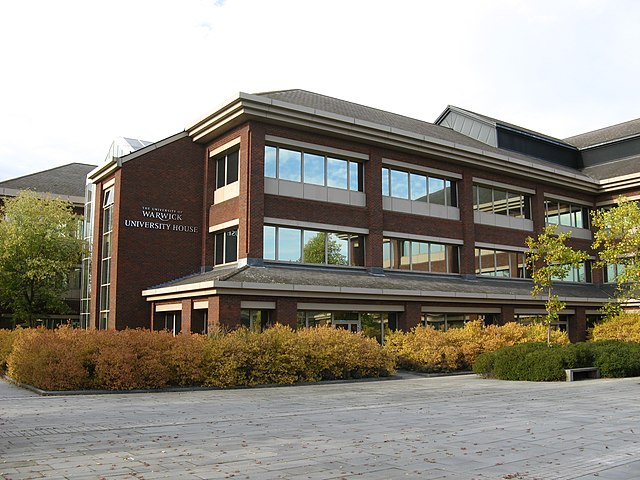
Picture: Warwick University House, Public Domain CC BY-SA 4.0 by Rwendland

CSO 11th annual workshop & open workshop: ‘Margaret Archer’s legacy to the social sciences’ – Grenoble Ecole de Management, Grenoble, France on Jan. 12th 2024 morning.

The 11th annual Centre for Social Ontology (CSO) workshop Celebrating Margaret Archer’s intellectual life and contributions will take place at Grenoble Ecole de Management (GEM), Grenoble, France, from January 9th to January 12th, 2024. It will culminate in an open workshop (roundtable) Margaret Archer’s legacy to the social sciences in the morning of Friday January 12th. The CSO is glad to invite GEM colleagues (e.g., Professors, PhD students) to attend this open workshop. Other researchers in the Grenoble area are also welcomed. This year, we will discuss the legacies of sociologist and social theorist Prof. Margaret S. Archer (†2023) who founded the CSO in 2011. Registration details below.

Margaret Archer’s legacy to the social sciences
Centre for Social Ontology Open Workshop

Friday 12th Jan. 2024, from 9.30am to noon
Grenoble Ecole de Management, 12 rue Pierre Sémard, 38000 Grenoble, France
Room F601 (last-minute change!), in-person only

Registration: please contact Aristide Bertrand on aristide.bertrand@grenoble-em.com (RSVP by Monday 18th Dec. 2023). Attendance is free of charge.

Discussants of this roundtable:

Ismael Al-Amoudi (Grenoble Ecole de Management, FR);
Mark Carrigan (University of Manchester, UK);
Anna Galazka (Cardiff University, UK);
Doug Porpora (Drexel University, PA, USA);
Genevieve Shanahan (Cardiff University, UK).

With special thanks from the CSO to Chrystel Brochand, from GEM research administration, for her prime role in making it possible for these discussants to discuss at GEM in-person.

Prof. Margaret S. Archer (†2023) was one of the most distinguished sociologists and social theorists of the late 20th and early 21st centuries. Although her life and career have been long and fruitful, her death also leaves a void among academics, esp. those interested in interdisciplinary research that combats structures of oppression and inequality. She leaves behind a large and dense sum of works that deserves to live through the future writings of new generations of scholars.

This year’s CSO Open Workshop consists in a roundtable gathering scholars from various disciplines and of various levels of experience who engaged with Archer’s work in their research. Participants shall discuss the contributions of Prof. Margaret Archer both to social theory and to the practices of (inter-disciplinary) social scientists. Doing so is compounded by the breadth of Archer’s intellectual career that went through several intellectual turns, each spanning over thousands of densely written pages: realism and temporality in the 1990s, in defence of Humanism in the 2000s; social reflexivity in the 2010s and philosophical reflections on personhood and robophobia in the late 2010s/ early 2020s…

Picture at the top: Copyright Agence Prisme / Pierre Jayet via GEM photothèque

Book review: Carrigan, M., & Porpora, D. (Eds.). (2021). Post-human futures: Human enhancement, artifical intelligence and social theory. Abingdon, UK: Routledge.

Dr. Birgül Ulutaş (Eregli Faculty of Education, Zonguldak Bülent Ecevit University, Zonguldak, Turkey) has just written a book review for Post‑Human Futures: Human Enhancement, Artificial
Intelligence and Social Theory
. This third volume of the CSO’s latest book series on ‘Post-human society and the future of humanity’ was edited by Dr. Mark Carrigan and Prof. Douglas Porpora.

The review appears in the journal Postdigital Science and Education and can be accessed here.

“Post-Human Futures: Human Enhancement, Artificial Intelligence and Social Theory (Carrigan and Porpora 2021) distinguishes between the epistemological and the ontological realms and establishes a new humanism that will be meaningful to praxis.” (Ulutaş, 2022).

Image: ‘Humani Victus Instrumenta: Ars Coquinaria’ (Unknown Italian master, 1569), Public Domain.

The Public and Their Platforms: Public Sociology in an Era of Social Media

Mark Carrigan, together with coauthor Lambros Fatsis, has recently published this volume on public sociology in the context of social media.

As social media is increasingly becoming a standard feature of sociological practice, this timely book rethinks the role of these mediums in public sociology and what they can contribute to the discipline in the post-COVID world. It reconsiders the history and current conceptualizations of what sociology is, and analyzes what kinds of social life emerge in and through the interactions between ‘intellectuals’, ‘publics’ and ‘platforms’ of communication. Cutting across multiple disciplines, this pioneering work envisions a new kind of public sociology that brings together the digital and the physical to create public spaces where critical scholarship and active civic engagement can meet in a mutually reinforcing way.

Find out more on the publisher’s website: https://bristoluniversitypress.co.uk/the-public-and-their-platforms