Tag Archives: featured

An eclectic account of lay morality and charitable giving in the UK – Feb 17th

Balihar Sanghera (Kent)
Tuesday, February 17th
5:00 PM to 6:30 PM, R1.04
Ramphal Building, University of Warwick

This paper examines how charitable giving is an outcome of different interacting elements of lay morality. Charitable giving reflects people’s capacity for fellow-feeling (or sympathy), moral sentiments, personal reflexivity, ethical dispositions, moral norms and moral discourses. An eclectic account of lay morality and charitable giving is warranted because of the complex nature of the object. Though ordinary people engage in ethical reasoning, they often think and act in piecemeal fashion, so that confusion and inconsistencies can occur. This is particularly evident when gender, class and ‘race’ shape people’s feelings and evaluations of others, their attention and care for others, and their understanding of responsibility and blame for social issues. Morality is further complicated because it takes place in the mundane world of everyday life that can result in inconsistent and confusing judgements and actions on giving.

All welcome! E-mail socialontology@warwick.ac.uk with any questions

Dave Elder-Vass on Prosumption, Appropriation and the Ontology of Economic Form

This seminar with Dave Elder-Vass (Loughborough) took place on Tuesday, January 27, 2015. You can listen to a recording of it here:

Prosumption – the unpaid performance of productive work by ‘consumers’ who thus help commercial businesses to generate a profit – is perhaps the most studied of the many hybrid forms of economic practice that have proliferated in the digital economy. A number of critical accounts have analysed prosumption in terms of Marx’s labour theory of value, suggesting for example that as prosumers do useful work for free they are infinitely exploited by the firms that profit as a result. But such accounts analyse the digital economy in terms that were derived from the nineteenth century factory – and terms that were highly questionable even in that context.

The spectacular mismatch between this model of capitalism and the case of prosumption exposes the inadequacy of the standard monolithic conception of capitalism as a homogeneous and universal contemporary economic form – a conception that at a certain level is also shared by the marketised discourse of mainstream economics. We need a new ontology of economic form that goes beyond the totalising concepts of mode of production and market economy and instead provides us with tools for understanding the sheer diversity of forms of economic practice in the contemporary economy. This paper offers the concept of appropriative practices as a contribution to such an ontology and applies it to the case of prosumption.

Dave Elder-Vass is a senior lecturer in sociology at Loughborough University, where he teaches a variety of core sociology modules. He also offers an MA module on Digital Economies and an innovative undergraduate option that consists entirely of debates between students on popular recent books. He is available to supervise PhD students, particularly those with an interest in social theory, critical realism, digital social developments or economic sociology.

Previously, he spent three years as a British Academy post-doctoral fellow in the Department of Sociology at the University of Essex, after completing his PhD at Birkbeck, University of London. Before returning to the academic world he was a senior IT executive in a major UK retail business.

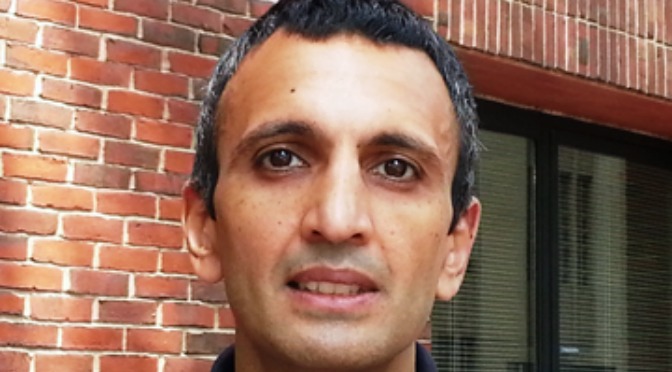
Roy Bhaskar, 1944-2014

roybhaskar

Roy Bhaskar died at his home in Leeds at about 6 pm GMT on Wednesday 19 November 2014.

‘It is not that there are the starry heavens above and the moral law within, as Kant would have it; rather, the true basis of your virtuous existence is the fact that the starry heavens are within you, and you are within them.’  (Roy Bhaskar, The Philosophy of MetaReality, p. 351)

The International Association for Critical Realism has established an online condolence book here: http://site.uit.no/iacrroy/

Graham Scambler on an interdisciplinary approach to the ‘structuring of agency’

In the third Centre for Social Ontology seminar of 2014/15, Graham Scambler (Emeritus Professor of Medical Sociology at UCL) discussed reflexivity and an interdisciplinary approach to the ‘structuring of agency’:

Margaret Archer’s recent contributions to our understanding of reflexivity in late capitalist society provide useful resources for theorizing across the substantive domains of sociology. Using illustrations from my own work on the sociology health inequalities in general, and my ideal type of the ‘vulnerable fractured reflexive’ in particular, I examine some of the pros and cons of adopting an interdisciplinary approach to the structuring of agency. I conclude with a skeletal research programme involving interdisciplinary collaboration.

The seminar took place on November 11th on the University of Warwick campus. You can listen to a recording of it here:


Guest talk by Margaret Archer at Cardiff University – 2nd Dec. 2014

Prof. Margaret Archer will give a guest-talk at Cardiff University on
an oft-neglected aspect of critical realism. She will address how
groups and group relations are transformed in important respects in
the course of pursuing and introducing social transformations. Her
talk draws empirical illustrations from the contestation of
intellectual property in Late Modernity.

The event is open to established researchers and doctoral candidates
in relevant disciplines. Please register through the link below.

Speaker: Prof. Margaret S. Archer.

Title: How Agency is transformed in the course of Social
Transformations: Don’t Forget the Double Morphogenesis.

Date: Tuesday 2nd December 2014 (2:30-4:30pm).

Venue: Lecture theatre E1.21, Sir Martin Evans Building, Museum Ave.
Cardiff CF10 3AX.

Organisers: Dr Ismael Al-Amoudi, Dr Tim Edwards, Prof. Rick Delbridge.

Registration link and additional info: https://www.eventsforce.net/cbs/105/home

Emma Uprichard on Complex Temporal Ontologies and Method – October 28th

In the second Centre for Social Ontology seminar of 2014/15, Emma Uprichard (Associate Professor at the Centre for Interdisciplinary Methodologies) discusses Complex Temporal Ontologies and Method:

This paper reflects on the methodological challenge of applying complexity theory to study social systems. More specifically, the focus is on the problem of capturing complex patterns of time and temporality empirically. The onus of the talk will be: a) to problematize existing longitudinal qualitative and quantitative social research approaches, which fail to capture complex temporal ontologies, and b) to suggest some tentative methodological alternatives which focus on capturing temporal patterns of change and continuity from a complex systems perspective. A particular concern throughout the discussion is how to study complex change and continuity empirically, whilst also ensuring that notions of agency and the reflexive ageing actor remain central.

All welcome! The seminar will take place on October 28th, from 5pm to 6:30pm in R1.15 (Ramphal Building) on the University of Warwick campus. See here for help getting to the campus. Feel free to contact Mark Carriganwith any questions.

Daniel Chernilo on The Idea of Philosophical Sociology

In the first Centre for Social Ontology seminar of 2014/15, Daniel Chernilo (Reader in Social and Political Thought at Loughborough University) discussed his work on philosophical sociology. This was the basis for a recent paper in the British Journal of Sociology.

chernilo2-smallIn this presentation, I introduce the idea of philosophical sociology as an enquiry into the relationships between implicit notions of human nature and explicit conceptualizations of social life within sociology. Philosophical sociology is also an invitation to reflect on the role of the normative in social life by looking at it sociologically and philosophically at the same: normative self-reflection is a fundamental aspect of sociology’s scientific tasks because key sociological questions are, in the last instance, also philosophical ones. The idea of philosophical sociology is then sustained on three main pillars and I use them to structure this article: (1) a revalorization of the relationships between sociology and philosophy; (2) a universalistic principle of humanity that works as a major regulative idea of sociological research, and; (3) an argument on the social and pre-social sources of social life. As invitations to embrace posthuman cyborgs, non-human actants and material cultures proliferate, philosophical sociology offers the reminder that we still have to understand more fully who are the human beings that populate the social world.

You can listen to a recording of the talk here: