The Fifth CSO Workshop: Morphogenesis & Eudaimonia

The fifth annual Centre for Social Ontology workshop took place from the 5th to 8th January 2016 at Sciences Po in Paris. The papers will be published as the fifth and final volume of the Social Morphogenesis series.

Tuesday 5th January: Eudaimonia and the Good Society

Phil Gorski – Human Flourishing and Human Morphogenesis
Doug Porpora –  Some Reservations about Flourishing
Maggie Archer – Human Thriving in the three Orders of Natural Reality
Andrea Maccarini – The Remains of the West: The Morphogenic Society as Source and Challenge to Human Fulfillment

Wednesday 6th January: Morphogenesis at the Macro-, Meso- and Micro-Levels of Society

Pierpaolo Donati – What does a ‘Good Life’ Mean in a Morphogenic Society?
Emmanuel Lazega – Networks and Commons: current organizational struggles to shape new sharing institutions
Mark Carrigan – The Challenge of Flourishing Amidst Variety
Wolfgang Hofkirchner – Creating Common Good :The vision of The Global Sustainable Information Society

Thursday 7th January: Eudaimonia and Social Institutions

Colin Wight  – Wars and human Flourishing
Ismael Al-Amoudi – Social Reflexivity and Political Reflexivity in a just Morphogenic society
Jamie Morgan – Corporations, taxation and responsibility: practical and onto-analytical issues for morphogenesis and eudaimonia

IACR 2016 Reminder

Deadline 31 Jan 2016. Submission guidelines on: http://tinyurl.com/jrh3jdj

We are also delighted to inform you about the following developments:

1. We are currently applying for funding to support PhD students. If you would like to be considered for a grant, please mention it on your abstract.

2. Our Yale colleagues (Margarita Mooney, Phil Gorski, Tim Rutzou) will be holding a post-conference discussion on CR methods on the day immediately following the conference. More info soon.

3. Alan Norrie is assembling papers for stream(s) on What’s love got to do with it?’ If you would like to see your paper included in that stream, please mention ‘what has love got to do with it?’ as a sub-title for your abstract.

Looking forward to a thoughtful and stimulating event,

Ismael Al-Amoudi, Joe O’Mahoney & Tim Edwards

Towards a Digital Social Ontology

Here are the talks from our Digital Social Ontology symposium, which took place in London, July 8th, 2015. This event was funded by the Independent Social Research Foundation. 

Nick Couldry –  Refiguring the social: Remembering Elias

Noortje Marres – Does digital sociology have a problem?

Alistair Mutch – Organizational implications of digital data

Emma Uprichard – Big data, complexity and time

Susan Halford – Ontologies of social data

Jochen Runde – An object orientated approach to digital social ontology

2016 Annual International Conference for Critical Realism

International Association for Critical Realism (IACR)
19th Annual Conference

Wednesday 20 – Friday 22 July 2016

Pre-conference workshop: Monday 18 – Tuesday 19 July 2016

Postgraduate Teaching Centre, Cardiff Business School
Colum Drive, Cardiff CF10 3EU

De/humanisation

The dehumanisation of contemporary societies

In many ways, our current epoch witnesses dehumanised social relations. While alienation (Marx) and disenchantment (Weber) or the deficit in social solidarity (Durkheim) are by no means recent phenomena, processes of dehumanisation continue to prevail in most spheres of society. In the public sphere, discussions privilege compliance with bureaucratic regulations and quantifiable indicators (such as GDP and its growth) over human needs and flourishing, have the effect of excluding large portions of the electorate from public debate while accelerating the demise of the Welfare State.

In the economic sphere, the financialisation of the economy and the spread of market ownership tend to privilege economic profitability over human well-being. Corporate Social Responsibility is thus deployed as a rhetorical device whose injunctions are followed mostly when they are profitable to corporate shareholders. Yet, contemporary observers of capitalism witness suffering, destitution and ethical corrosion, both in richer and in poorer countries. Equally worryingly, the private sphere also seems to have undergone dehumanisation: for instance, impersonal relations are the lot of ever-growing urban centres, whilst familial duties of care are gradually replaced either by indifference or by reliance on salaried transactions with professional carers.

The dehumanisation of the social sciences

The dehumanisation of society is mirrored, and perhaps intensified, by the exclusion of the notion of ‘human’ and ‘humanity’ from the social sciences and humanities in the second half of the 20thCentury. While philosophers such as Foucault, or more recently Butler, have warned against taken for granted conceptions of the human, their warnings seem to have produced effacement, rather than problematisation, of the category of ‘human’.

The realist tradition provides, however, salutary exceptions to this trend. In his dialectical critical realism, Bhaskar (1993, 1994) advances a theory of human flourishing alongside a diagnosis of the ills of modernity. Neo-Aristotelian authors such as Sen and Nussbaum have developed political philosophies that place human capabilities at the centre of the stage. In feminist studies, Lawson (2009) advocated ‘minimal humanism’ and in sociology Archer (2000), Sayer (2011) and Smith (2010) have taken stock of the absence of human subjects from social scientific accounts and sketched the contours of a humanist social science.

Rehumanising society and the social sciences?

The purpose of this conference is to explore how critical realism (CR) can contribute to rehumanising both society, and the social sciences. We welcome contributions from all areas of the humanities and social sciences. Equally welcome are contributions inspired by the various voices of CR, both within Bhaskar’s philosophy (critical naturalism, dialectical critical realism, metaReality) and by the various authors who contributed to CR’s flourishing.

Full details are available on: https://www.eventsforce.net/cbs/156/home

The organising team is Ismael Al-Amoudi, Tim Edwards & Joe O’Mahoney.

Please circulate this call to your Networks.

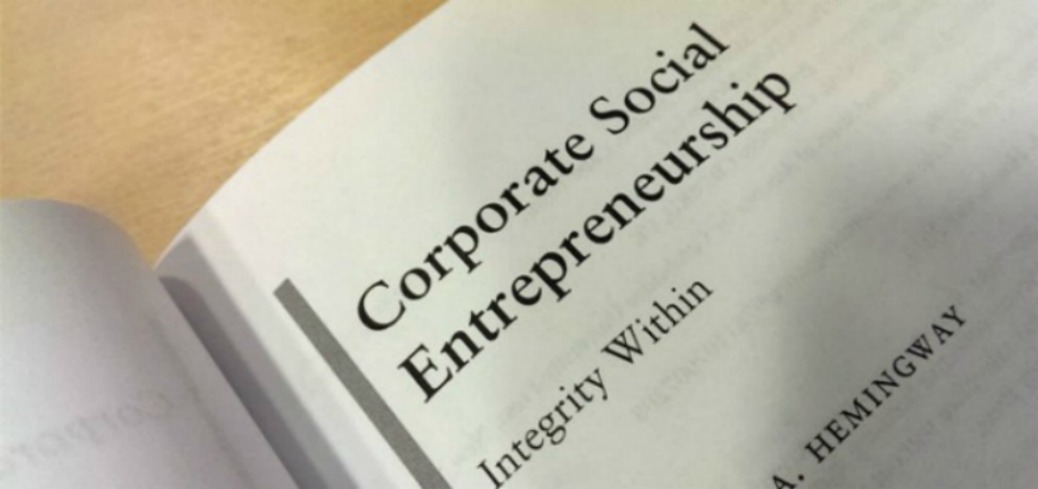
Corporate Social Entrepreneurship – Christine Hemingway

A new book from CSO associate Christine Hemingway. See here for more details:

Neo-liberal capitalism has failed spectacularly and old-style socialism is not an alternative. I applied morphogenetic theory to the tentative, ethnographically-derived findings from my exploratory research into social responsibility as a subjective state, amongst corporate employees. Chapter 12 of my book theorises how corporate social responsibility (CSR) has shifted from the old Friedmanite perspective of subversive doctrine and can move beyond current instrumental CSR, espoused by the majority of ‘Conformist’ employees. Corporate social entrepreneurs, in the minority, operate regardless of the organisational climate. If they are given political legitimacy in the workplace, we might expect the growth of a much better form of capitalism than we have at the present time.

Workshop and Symposium: The Question of the Human in Social Theory and Social Research

25th November 2015, 11:00 to 17:00
WT0.05, University of Warwick 

This workshop and symposium will explore the, mostly implicit, conceptions of the human, humanity and human nature that underpin various contemporary conceptions of social life. In the context of much-publicised post-human futures, this is an invitation to reconsider the idea that social life itself is predicated on the fact that human beings are capable of such collective existence. Humans are beings who have a continuity of consciousness so that they see themselves as themselves throughout their life; human are beings who negotiate a multiplicity of sometimes contradictory identities and recognise each other as members of the same species, and they are also beings who can create and interpret cultural artefacts. Crucially, humans are beings who can deploy a sense of self-transcendence so that they are able to look at the world from somebody else’s point of view and thus conceive new social institutions.

The main focus throughout the day will be on how questions about the human are encountered in social theory and social research and what are the various implications and challenges of taking these seriously in our work. The day of activities will be divided into two parts. During the morning, we will have a participatory workshop for PhD students and early-career researchers. The goal of the workshop is to help participants negotiate the sometimes abstruse scientific, philosophical, moral, and even theological underpinnings of asking questions about ‘the human’ in the context of their own research projects. Dr Daniel Chernilo (Loughborough University) will offer a general overview of this field of enquiry as well as reflect on its various implications. We will also invite participants to reflect on their own research projects by making a brief (10-minute) presentation of their research projects and how questions about the human have been or are expected to be encountered within them. We’d like to ask all participants to reflect in advance on conceptions of the human and how they pertain to their projects. Uncertainty here is not a problem, in fact it will be a useful contribution to discussions on the day! In the afternoon, we will have a symposium in which Dr Mark Carrigan, Professor Margaret Archer and Daniel Chernilo will engage with questions of the human as they unfold in their own work on digital sociology (Carrigan), the morphogenetic society (Archer), and philosophical sociology (Chernilo).

To register your interest, please contact D.Chernilo@lboro.ac.uk and Mark@Markcarrigan.net with a brief description (500 words or less) of your research and how questions of the human are relevant to it by October 31st, 2015. The event is free but places are limited. Travel bursaries are available for those in need of it, please ask for more details.

Conference: Marking 25 Years of the Cambridge Realist Workshop

From our affiliated centre at Cambridge:

A reunion conference, generously sponsored by the Cambridge Journal of Economics, is to be held in Newnham College, Cambridge, 7-9 September 2015, marking 25 Years of the Cambridge Realist Workshop.

Conference Themes

The Conference Theme is ‘Social Ontology and Modern Economics’.

There will be no parallel streams, just a series of single sessions.  To allow maximum participation of everyone present the sessions will be mostly round tables on specific sub themes, with two or three individuals giving short introductions.

Those already agreeing to introduce various themes or otherwise participate include: Richard Arena, Bruce Caldwell, Steve Fleetwood, Tony Lawson, John Latsis, Paul Lewis, Nuno Martins, Dimitris Milonakis, Leon Montes, Jamie Morgan and Stephen Pratten.

Likely sub themes include (but are not exhausted by):

  • Philosophical Ontology (emergence; causal reduction and downward causation; process and evolution; entities and stability; order and co-ordination; practice including language; comparing competing conceptions);
  • Ontology and Heterodox Economics;
  • Ontology in the History of Economic Thinking;
  • Topics in Scientific Ontology (money, technology, gender, the corporation, social relations, institutions, communities, power, trust, rules, collective practices; method for scientific ontology);
  • Ontology and Methodology (dialectics/contrast explanation; abstraction; methods of isolation; internal critique; transcendental reasoning);
  • Ontology, Ethics, and Moral Conduct.

Conference structure

The conference will start late afternoon on Monday September 7 and most likely end around lunchtime on Wednesday September 9th.  There will be conference dinners on both the Monday and the Tuesday evening, with a reception on the Monday.

Registration and other administrative stuff. 

A conference fee of £24 (£20 +VAT) will be charged.  However this is merely nominal. Participants will thereafter be invited to participate in both the conference dinners plus lunches, etc., without additional charge. Numbers though are limited to about 70 participants, and we do need you to register. In order to register please go to:  http://www.cpes.org.uk/events/25-crw/

Accommodation

Basic (non en-suite) accommodation is available at Newnham College at very reasonable rates (about £48 per night inclusive of VAT). To book a Newnham College room please contact Marilyn Dowling, the Conference and Events Co-ordinator at Newnham College (Sidgwick Avenue, Cambridge CB3 9DF) by email:  marilyn@newn.cam.ac.uk  (telephone : +44 (0) 1223 335803).

Other Cambridge accommodation can be located here (though please check you are not further than you would like to be from Newnham College [CB3 9DF]):  http://www.visitcambridge.org/accommodation

Whether you stay in College or elsewhere in Cambridge, do please register above first, and make sure you have a confirmation of registration. We are restricted to accepting only the first 70 so to register.

Hardship Fund

We do have a small amount of funding to help those whose situations make it difficult to raise the total costs themselves. Applicants for this should get in touch as soon as possible. Apply, sending details, to CSOG@econ.cam.ac.uk with subject heading ‘CSOG funding’.